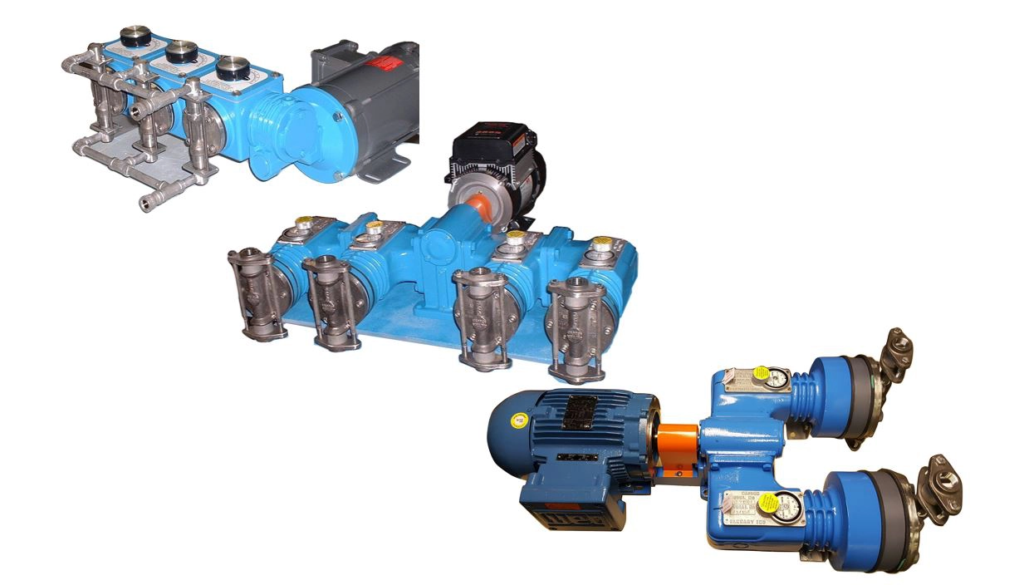
Solenoid-Driven Metering Pumps vs Electric Motor Driven Metering Pumps
One of the questions we frequently get asked when potential customers are designing their dosing system is – would we be better off with a solenoid-driven metering pump or an electric motor driven pump. The short answer is, if the dosing system is critical and running 24/7 and you can afford the upfront cost, electric motor driven pumps are the way to go. Let’s explore this topic further.
Solenoid-driven Metering Pumps
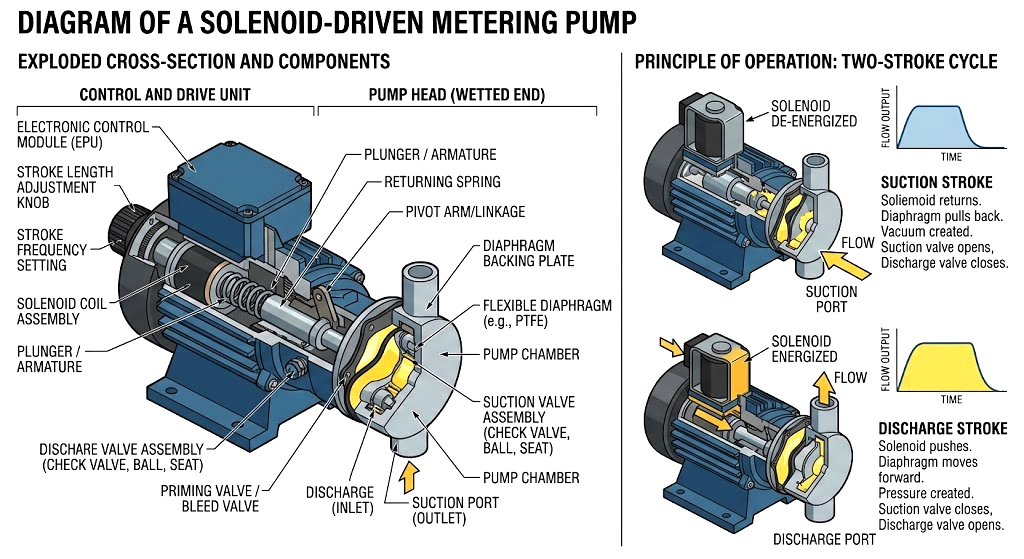
Solenoid-driven metering pumps have a copper wire coil inside that acts as an electromagnet. Electric current flows through the coil creating magnetic waves. The magnetic waves then move a plunger that is attached to a spring. The plunger is what creates the pumping action, the spring pulls the plunger back, and the cycle repeats.
Disadvantages
Due to the way that solenoid-driven pumps work, they need to be manufactured in different sizes to offer a wide range of flow rates. They have valves that can be prone to clogging. Depending on what chemical you are metering, this can become an ongoing maintenance issue. Solenoid-driven pumps rely heavily on the spring that is attached to the plunger for even chemical metering. This spring is constantly in use and can be prone to wear and tear.
Advantages
The biggest advantage of solenoid-driven metering pumps is the upfront cost. They are generally constructed of lower-cost materials and built to be disposable. When budgets are tight, a solenoid-driven metering pump may be the way to go. You may end up spending more than you would long term with a motor driven pump, but a solenoid pump could get your system up and running at a lower initial cost.
Electric Motor Driven Metering Pumps
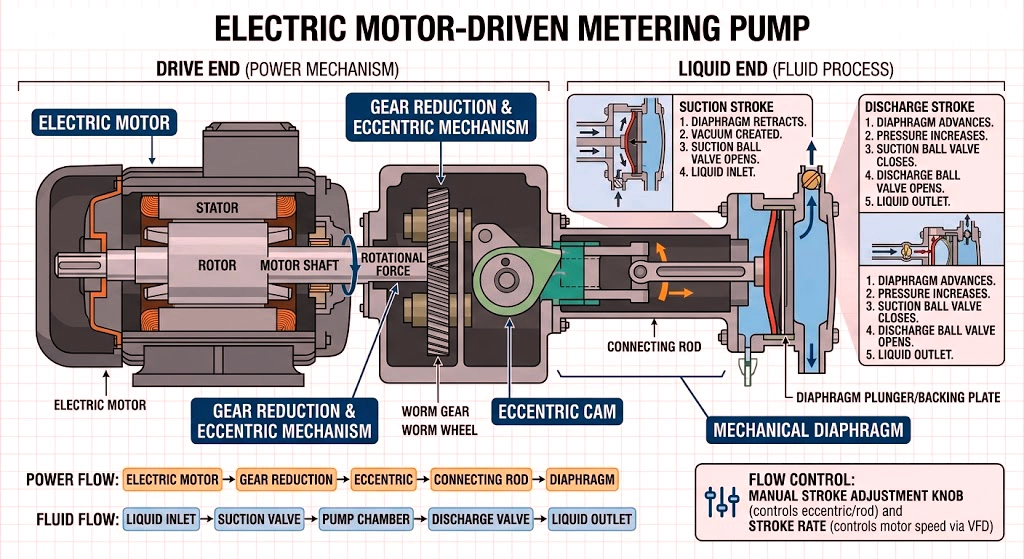
Electric motor driven metering pumps outshine solenoid-driven pumps on every factor other than upfront cost. If your business can afford to sink the money into an electric motor-driven pump, we strongly recommend you do so.
Being that they come with a larger upfront price tag, electric motor driven pumps are generally constructed in a way that allows customers to replace parts as needed instead of replacing the whole pump. It is important that you make sure the company you are ordering from manufacturers and stocks replacement parts. Madden stocks replacement parts for all our pumps and can often ship them out same-day. These parts are often constructed out of higher quality materials than you would see on a solenoid-driven metering pump.
Electric motor driven metering pumps have a wide range of output. To change the flow rate, the speed of the motor can be changed, the size of the motor can be changed, and many pumps also come with an adjustment knob to further dial in the flow rate. Madden diaphragm metering pumps feature a 10-to-1 adjustment knob that allows you to fine tune the output while also maintaining +/-1% accuracy.
Summary
While solenoid-driven pumps and electric motor-driven pumps can achieve similar outputs, electric motor-driven pumps are more cost-effective long term. The parts are generally of higher quality; they are serviceable and are appropriate for a wider range of chemicals. Electric motor-driven metering pumps will generally be more accurate long term without needing adjustment and are better for critical processes. If your budget allows it, Madden always suggests going with an electric motor-driven pump. Give us a call 1-800-369-6233 or send us a message through our website to explore the options Madden offers and find the right pump for your dosing system.